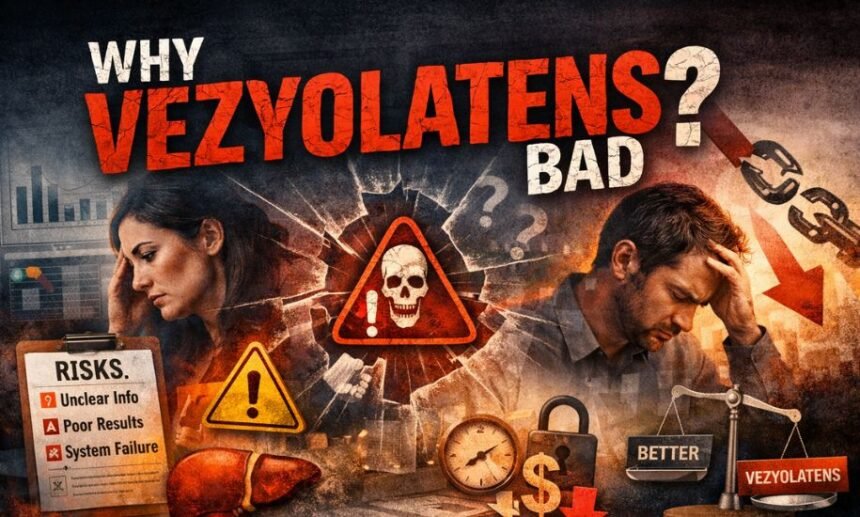
In recent months, the phrase why vezyolatens bad has been appearing more frequently across online discussions, search queries, and curiosity-driven forums. Many people encounter the term vezyolatens without clear context, yet the growing concern around it raises an important question: what exactly makes vezyolatens bad, and why are people warning others about it?
This article takes a deep, balanced, and easy-to-understand look at why vezyolatens bad has become a topic of interest. Rather than relying on hype or fear-based claims, we’ll explore the commonly reported issues, potential drawbacks, broader implications, and why skepticism around vezyolatens continues to grow. Whether you are researching for awareness, education, or content creation, this guide is designed to give you a complete picture.
Understanding vezyolatens in simple terms
Before diving into why vezyolatens bad, it helps to clarify what the term generally represents. Vezyolatens is often described as a concept, product, or system associated with questionable reliability and negative outcomes. Depending on where it appears, it may be referenced as a process, digital solution, experimental method, or emerging trend rather than a clearly defined, regulated entity.
What makes vezyolatens controversial is not just what it claims to offer, but the gap between expectations and real-world outcomes. This gap is one of the primary reasons critics argue vezyolatens is bad.
The lack of transparency raises red flags
One of the strongest arguments behind why vezyolatens bad is the consistent lack of transparency. Users often report that information surrounding vezyolatens is vague, inconsistent, or difficult to verify. Clear documentation, open explanations, and verifiable data are essential for trust, and vezyolatens appears to fall short in this area.
When transparency is missing, users are left guessing about:
- How vezyolatens actually works
- What risks may be involved
- Who is responsible if something goes wrong
This uncertainty alone is enough for many to consider vezyolatens unreliable or unsafe.
Unclear benefits compared to promised outcomes
Another major reason behind why vezyolatens bad is the mismatch between promises and results. In many discussions, vezyolatens is associated with bold claims—improved efficiency, better performance, or revolutionary impact. However, user experiences often suggest that these benefits are overstated or fail to materialize altogether.
This creates frustration and disappointment, especially for those who invested time, money, or effort expecting meaningful results. Overpromising and underdelivering is a pattern that damages credibility and fuels negative perceptions.
Potential risks and unintended consequences
A critical aspect of why vezyolatens bad involves potential risks that are not always clearly disclosed upfront. These risks may not be immediately visible, which makes them even more concerning. In many cases, issues only become apparent after prolonged use or deeper involvement.
Commonly discussed risks include:
- Performance instability
- Unexpected failures or disruptions
- Loss of control or flexibility
- Long-term dependency without clear exit options
When risks outweigh benefits, or when users are not adequately warned, vezyolatens naturally earns a bad reputation.
User experience and usability concerns
Another frequently cited reason behind why vezyolatens bad relates to poor user experience. Ease of use, intuitive design, and clear guidance are essential for adoption. Vezyolatens is often criticized for being confusing, difficult to navigate, or poorly structured.
A negative user experience doesn’t just slow people down—it actively pushes them away. When users feel overwhelmed or misled, trust erodes quickly, reinforcing the idea that vezyolatens is more trouble than it’s worth.
Ethical and responsibility-related questions
Ethics play a surprisingly large role in discussions about why vezyolatens bad. In some narratives, vezyolatens is associated with questionable practices, unclear accountability, or a lack of responsibility toward users. When systems or concepts operate without ethical clarity, they raise concerns beyond performance alone.
People increasingly expect fairness, responsibility, and user-first thinking. Anything perceived as exploiting loopholes, manipulating outcomes, or avoiding accountability is likely to face backlash.
Long-term sustainability issues
Short-term functionality does not guarantee long-term success. One reason why vezyolatens bad remains a relevant topic is its perceived lack of sustainability. Users often question whether vezyolatens can adapt, improve, or remain viable over time.
Sustainability concerns may include:
- Limited updates or improvements
- Poor adaptability to change
- Growing costs over time
- Declining effectiveness
Without a clear long-term vision, vezyolatens struggles to earn confidence from users who value stability and future-proof solutions.
Comparisons with better alternatives
Another factor reinforcing why vezyolatens bad is comparison. When alternatives exist that are more transparent, reliable, and user-friendly, vezyolatens naturally looks weaker by contrast. These comparisons highlight flaws that might otherwise be overlooked.
In competitive environments, mediocrity stands out. When vezyolatens is measured against stronger options, its shortcomings become even more obvious.
Psychological impact on users
An often-overlooked angle in discussions about why vezyolatens bad is the psychological toll it can take. Confusion, unmet expectations, and repeated issues can lead to frustration, stress, and loss of confidence—especially for users who depend on consistency.
This emotional impact contributes to negative word-of-mouth, which spreads quickly and shapes public perception more powerfully than technical details alone.
Why skepticism around vezyolatens keeps growing
Skepticism does not arise in a vacuum. It builds through shared experiences, repeated patterns, and unanswered questions. The ongoing conversation around why vezyolatens bad reflects a broader demand for clarity, honesty, and accountability.
As users become more informed and selective, tolerance for vague or underperforming concepts decreases. Vezyolatens, fairly or not, has become a symbol of what happens when expectations are not grounded in reality.
Final thoughts on why vezyolatens bad
In summary, why vezyolatens bad is not about a single flaw but a combination of issues—lack of transparency, unclear benefits, potential risks, poor user experience, and questionable long-term value. Together, these concerns paint a picture of something that struggles to meet modern standards of trust and reliability.
That doesn’t mean every mention of vezyolatens is inherently negative, but it does explain why caution is widely advised. Awareness and critical thinking are essential when evaluating anything surrounded by ambiguity.
Here at Daily Spectrum, we believe informed readers make better decisions. By examining topics like this from multiple angles, you gain clarity instead of confusion. Understanding why vezyolatens bad is ultimately about learning what to avoid—and what qualities truly matter in reliable systems and ideas.