What Are Pavers?
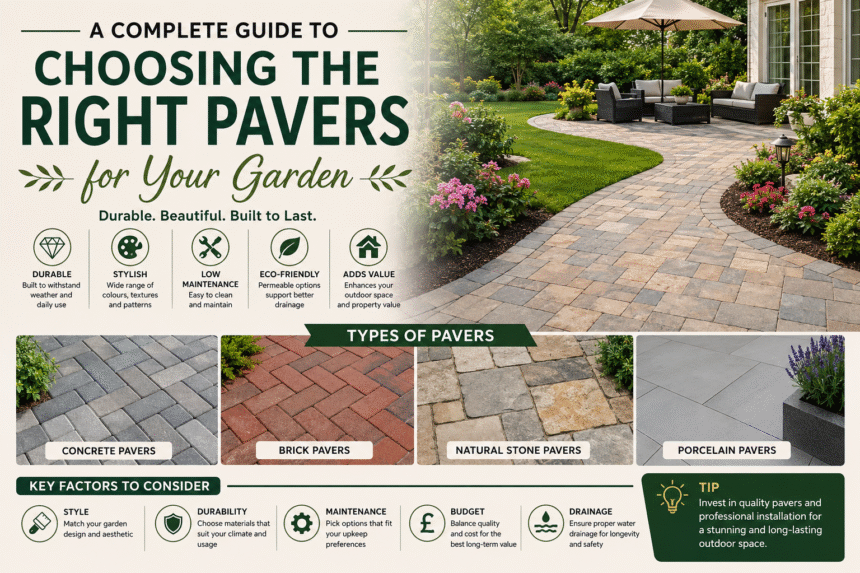
Pavers are individual units made from materials such as concrete, brick, natural stone, or porcelain that are used to create outdoor surfaces.
Unlike poured concrete, pavers are installed individually, allowing greater flexibility in design and easier repairs if damage occurs.
Common applications include:
- Garden paths
- Patios
- Courtyards
- Driveways
- Pool surrounds
- Outdoor entertaining areas
Because they come in many shapes, colours, and textures, pavers offer virtually endless design possibilities.
Why Choose Pavers for Your Garden?
Pavers remain one of the most popular landscaping materials for several reasons.
Durability
Quality pavers can withstand heavy foot traffic and varying weather conditions without cracking easily.
Visual Appeal
Pavers enhance the overall appearance of outdoor spaces and can complement both traditional and modern garden designs.
Easy Repairs
If one section becomes damaged, individual pavers can be replaced without removing the entire surface.
Design Flexibility
They are available in numerous:
- Colours
- Shapes
- Sizes
- Patterns
- Finishes
Improved Property Value
Well-designed outdoor spaces often contribute to increased property appeal and resale value.
Types of Pavers
Understanding the different types of pavers is essential before making a purchase.
Concrete Pavers
Concrete pavers are among the most widely used options.
Advantages
- Affordable
- Available in many styles
- Durable
- Easy to install
Best For
- Patios
- Garden paths
- Driveways
Considerations
Colours may fade over time if not properly sealed.
Brick Pavers
Brick pavers offer a timeless and classic appearance.
Advantages
- Traditional aesthetic
- Long lifespan
- Slip-resistant surface
Best For
- Cottage gardens
- Heritage properties
- Walkways
Considerations
Limited colour options compared to concrete.
Natural Stone Pavers
Natural stone creates a premium and luxurious outdoor finish.
Popular options include:
- Granite
- Limestone
- Sandstone
- Slate
- Travertine
Advantages
- Unique appearance
- Highly durable
- Natural beauty
Best For
- Premium landscaping projects
- Outdoor entertaining areas
Considerations
Higher initial cost.
Porcelain Pavers
Porcelain has become increasingly popular in modern garden designs.
Advantages
- Low maintenance
- Stain resistant
- Fade resistant
- Modern appearance
Best For
- Contemporary gardens
- Outdoor dining areas
Considerations
Professional installation may be required.
Comparing Different Paver Materials
| Material | Durability | Cost | Maintenance | Appearance |
|---|---|---|---|---|
| Concrete | High | Moderate | Low | Versatile |
| Brick | High | Moderate | Low | Traditional |
| Natural Stone | Very High | High | Moderate | Premium |
| Porcelain | Very High | High | Very Low | Modern |
This comparison can help narrow your options based on budget and design preferences.
How to Choose the Right Pavers
Several factors should influence your decision.
Consider Your Garden Style
Different pavers suit different landscaping themes.
Modern Gardens
Choose:
- Porcelain pavers
- Large-format concrete pavers
- Neutral colours
Traditional Gardens
Consider:
- Brick pavers
- Natural stone
- Warm earthy tones
Rustic Gardens
Natural stone works exceptionally well in rustic settings.
Evaluate Durability Requirements
Ask yourself:
- Will vehicles drive over the area?
- Is the space exposed to heavy rainfall?
- Will there be frequent foot traffic?
Driveways generally require thicker and stronger pavers than pathways.
Think About Maintenance
Some materials require more upkeep than others.
Low-Maintenance Choices
- Porcelain
- Concrete
Higher-Maintenance Choices
- Certain natural stones
- Brick in damp environments
Match Existing Features
Consider your home’s:
- Exterior materials
- Roofing colour
- Fence design
- Garden structures
Coordinating pavers with these elements creates a cohesive appearance.
Set a Realistic Budget
Costs vary significantly between materials.
Budget planning should include:
- Materials
- Base preparation
- Installation
- Sealing
- Future maintenance
A lower upfront price does not always result in the best long-term value.
Best Uses for Garden Pavers
Garden Pathways
Pavers create attractive and functional routes through gardens.
Popular choices include:
- Brick
- Natural stone
- Concrete stepping stones
Patios
Patios are one of the most common applications for pavers.
Benefits include:
- Outdoor dining space
- Entertainment area
- Increased property appeal
Driveways
Driveway pavers offer strength and visual appeal.
Recommended materials:
- Concrete
- Brick
- Granite
Courtyards
Courtyards benefit from decorative paving patterns that add character and elegance.
Pool Areas
Slip-resistant pavers help improve safety around swimming pools.
Travertine and textured porcelain are popular options.
Popular Paver Design Ideas
Herringbone Pattern
A classic pattern that provides excellent strength and visual interest.
Basket Weave Pattern
Ideal for traditional and heritage-style gardens.
Running Bond Pattern
Simple, clean, and suitable for modern designs.
Circular Features
Circular paving layouts can create focal points within larger garden spaces.
Mixed Material Designs
Combining natural stone with concrete borders can add contrast and sophistication.
Installation Considerations
Proper installation is essential for long-term performance.
Prepare the Base Correctly
A solid foundation helps prevent:
- Movement
- Sinking
- Uneven surfaces
Ensure Proper Drainage
Poor drainage can lead to:
- Water pooling
- Weed growth
- Surface damage
Use Quality Jointing Materials
Jointing sand helps stabilise pavers and reduce movement.
Consider Professional Installation
Large projects often benefit from professional expertise, especially for:
- Driveways
- Complex patterns
- Sloped areas
Maintaining Your Pavers
Regular maintenance helps preserve appearance and performance.
Sweep Frequently
Removing leaves and debris prevents staining and weed growth.
Wash Periodically
Use water and a mild cleaning solution to remove dirt and grime.
Reapply Sealant When Needed
Sealing can:
- Protect colour
- Reduce staining
- Improve longevity
Address Weeds Early
Remove weeds as soon as they appear to prevent root damage.
Repair Damaged Sections Promptly
Replacing individual pavers is often simple and cost-effective.
Common Mistakes to Avoid
Many homeowners make avoidable mistakes when selecting pavers.
Choosing Based on Appearance Alone
Always consider durability and maintenance alongside aesthetics.
Ignoring Drainage Requirements
Poor drainage can shorten the lifespan of your paving.
Underestimating Traffic Levels
A decorative paver suitable for a pathway may not withstand driveway use.
Selecting the Cheapest Option
Investing in quality materials often reduces long-term repair and replacement costs.
Skipping Base Preparation
Even premium pavers can fail if installed on an inadequate foundation.
Conclusion
Choosing the right pavers for your garden involves balancing aesthetics, functionality, durability, and budget. With options ranging from affordable concrete pavers to luxurious natural stone and modern porcelain, there is a solution for every style and outdoor space.
By carefully considering your garden design, intended use, maintenance expectations, and long-term goals, you can create beautiful pathways, patios, and outdoor living areas that enhance your property for years to come.
The best pavers are not necessarily the most expensive—they are the ones that meet your specific needs while complementing the overall character of your garden. Taking the time to plan properly will help ensure a successful landscaping project and lasting satisfaction.